2025 – Present
Ding
An AI business partner for restaurants. Ding consolidates the data a restaurant already generates and runs the operational work on a schedule, autonomously. It started as something else entirely.
My roleFounder. I led product design, product vision and client relations, and I built the technical core: the agent harness, the orchestration layer, and the skills and tools the agents run on. Four-person cross-functional team, shipping weekly.
Outcome
- 12 active restaurant clients in under seven months.
- Four-person cross-functional team shipping weekly, with me owning product direction and the agent platform.
- One deliberate pivot, from a diner-facing menu assistant to restaurant operations, driven by discovery rather than preference.
Where it started
We were the customer
My co-founder and I did not start from a market. We started from the fact that we both disliked eating out, because you often cannot tell what is actually in the dish in front of you.
That is a real frustration, and being the customer is a decent place to start. It is also how we ended up solving the wrong problem for a while.
The wrong problem
We found a symptom and mistook it for the root
We read our own frustration as a transparency problem with menus, and built for that. The first version of Ding was an AI chatbot embedded in the menu, given the context of that menu and that restaurant, there to answer a diner's questions while they ordered.
The branding was built around it. Order Smart. Serve Fast. Everything pointed at the moment of ordering.
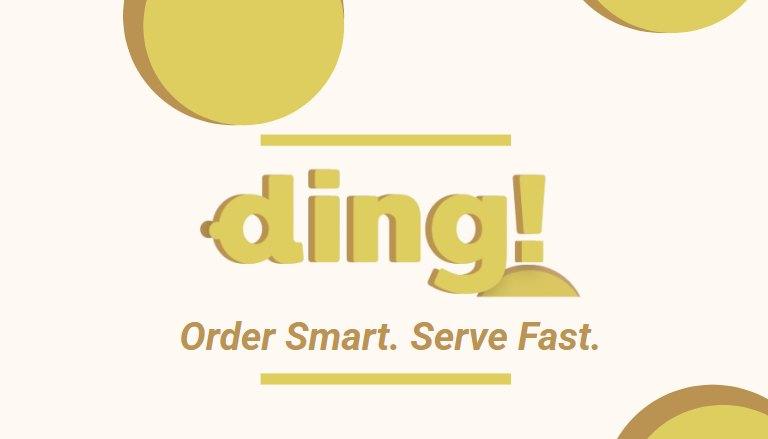
The original identity. The tagline is the clearest record of what Ding was before the pivot: a diner-facing product aimed at the moment of ordering. Why it did not hold
Solving it did not mean anyone would buy it
It worked, and it genuinely helped a diner order with more confidence. But it addressed a symptom in isolation, and it ran into a harder problem than whether the technology was any good: most restaurant owners would not pay for it.
A diner-facing convenience is not a line item an owner defends. We were improving someone's experience without improving the operator's business, and the operator is the one signing.
The root problem
Restaurants are drowning in their own data
Rather than keep patching the symptom, we went after what was underneath it: restaurants run inefficiently because of what happens to their information.
A restaurant generates data from a wide spread of sources that do not talk to each other. The POS system. The CRM. The questions customers actually ask. In practice that data is either processed badly, never used at all, or missing from the analysis entirely. Nobody is sitting down to join it up, because the people who could are running service.
That is a problem an owner feels and will pay to remove, and it is the same underlying issue our original menu idea was a small downstream symptom of.
The solution
One agent, acting as the business partner
The answer we landed on was consolidation: pull all of it into a single agent that acts as the restaurant's business partner rather than another dashboard to go and check.
The critical part is that you give it a schedule and it performs the work autonomously. Not a tool that waits to be opened by someone who has no time to open it, but something that does the job and reports back.
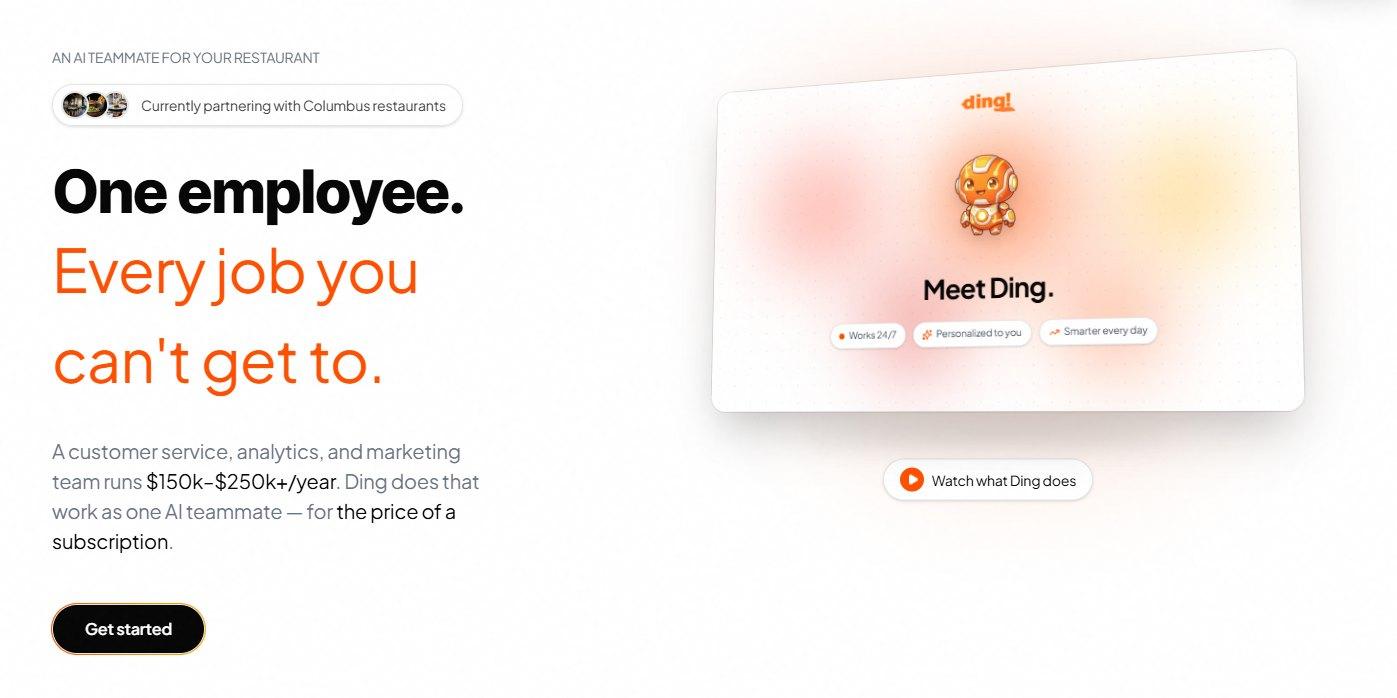
The positioning that came out of the pivot. The comparison is to a hire, not to other software, because that is the decision an owner is weighing. The product
Routines, not a chat box
A chat box hands the work back to the owner, who then has to know what to ask and remember to ask it. Routines invert that: you pick outcomes you want and Ding delivers them on a cadence.
A morning briefing before service starts. A daily closeout covering revenue, orders, refunds and anything unusual. A weekly report measured against Ding's own job description. Goal check-ins, a daily insight watch for meaningful changes, a monthly health audit that turns findings into a fix plan, and a demand forecast for staffing and prep.
The framing on the calendar matters as much as the scheduling: each block is when you receive something, not a time you need to be free.
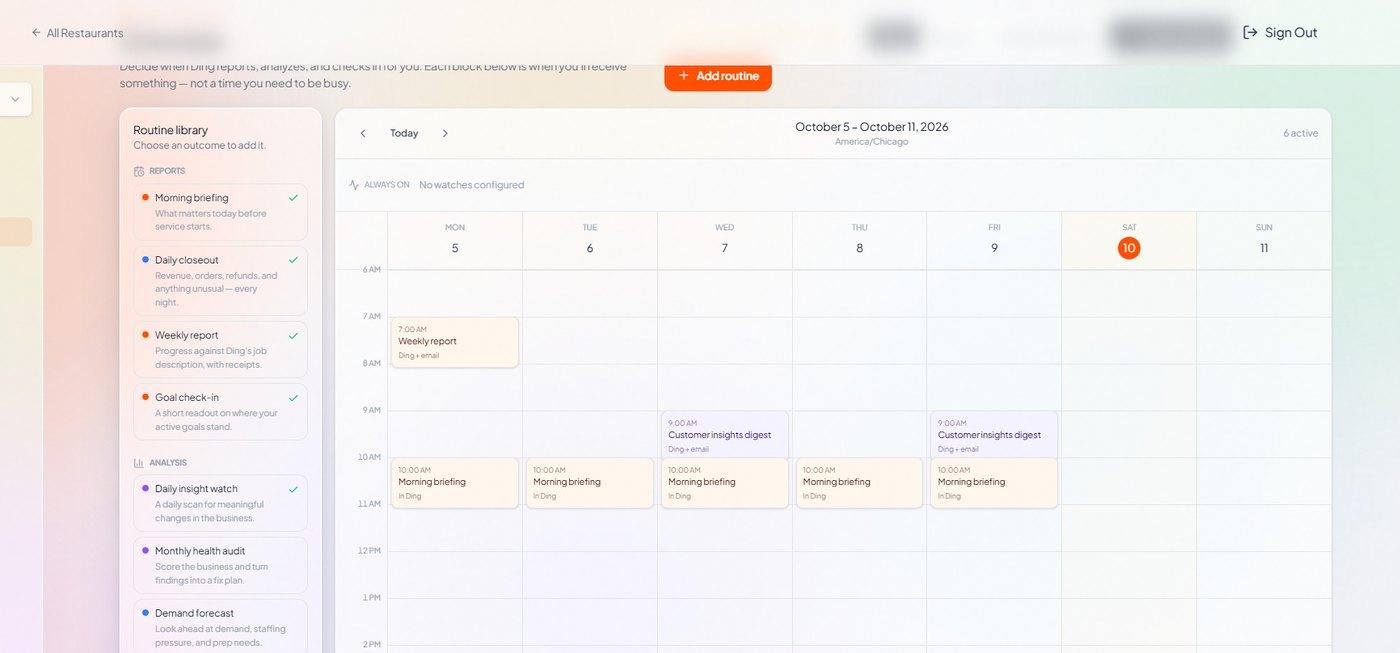
Routines in the product. The library on the left is a menu of outcomes; the calendar is when they land. Client names are blurred. Under the hood
What one business partner actually requires
Making one agent do several jobs well is an architecture problem, and it is the part I built. The agent harness that runs them, the orchestration layer that decides which agent handles what and in what order, and the skills and tools underneath that let them act on the restaurant's systems rather than just describe them.
It is a platform rather than a feature set because of the positioning. A business partner is expected to pick up new responsibilities, so every routine in the library is the same machinery pointed at a different outcome. That is what makes the next one cheap to add.
Where it stands
Funded, shipping, and in restaurants
Ding has 12 active restaurant clients in under seven months. The team is four people, cross-functional, shipping weekly, and we pitched the company at an accelerator against 12 other teams.
I run client relations alongside product, which is deliberate. The fastest signal about whether a routine earned its place is what an owner says about the last one, and I would rather hear that directly than through a summary.
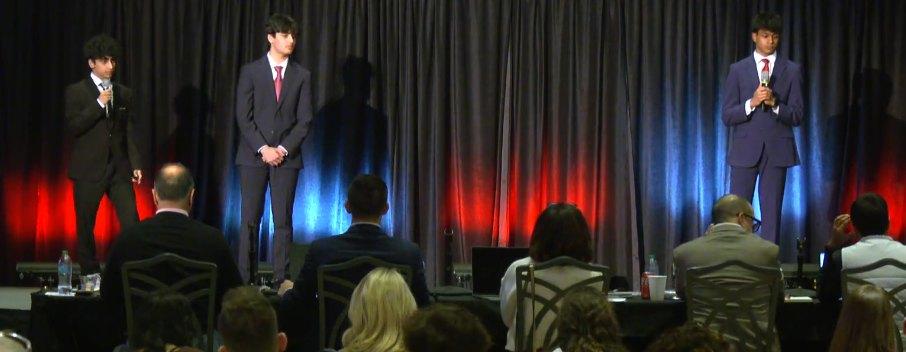
Pitching Ding against 12 other teams at the accelerator.
What I learned
- Being the customer is a good way to find a frustration and a bad way to find a business. Our own annoyance as diners pointed at a real problem, but it pointed at the symptom, and the person feeling the symptom was not the person who would pay.
- Check who signs before you build. The menu assistant worked. It still failed the only test that mattered, which was whether an owner would put it on the books.
- Go one level down before you build the fix. Menu transparency was a downstream consequence of restaurants not joining up the data they already have, and the root problem was both bigger and more fundable.
- Dashboards hand the work back to the person who has none. Deciding Ding had to produce finished work on its own schedule is what turned it from a tool into a teammate.
- Positioning constrains architecture. Calling it a business partner meant it had to take on new responsibilities over time, which is why it is a platform with a routine library rather than a fixed feature set.
Skills
- Product vision and roadmap
- Customer discovery
- Agent harness and orchestration design
- Tool and skill design for LLM agents
- Product design
- Client relations
- Leading a cross-functional team