Project
George: Your Robot Companion!
Media
What is the project
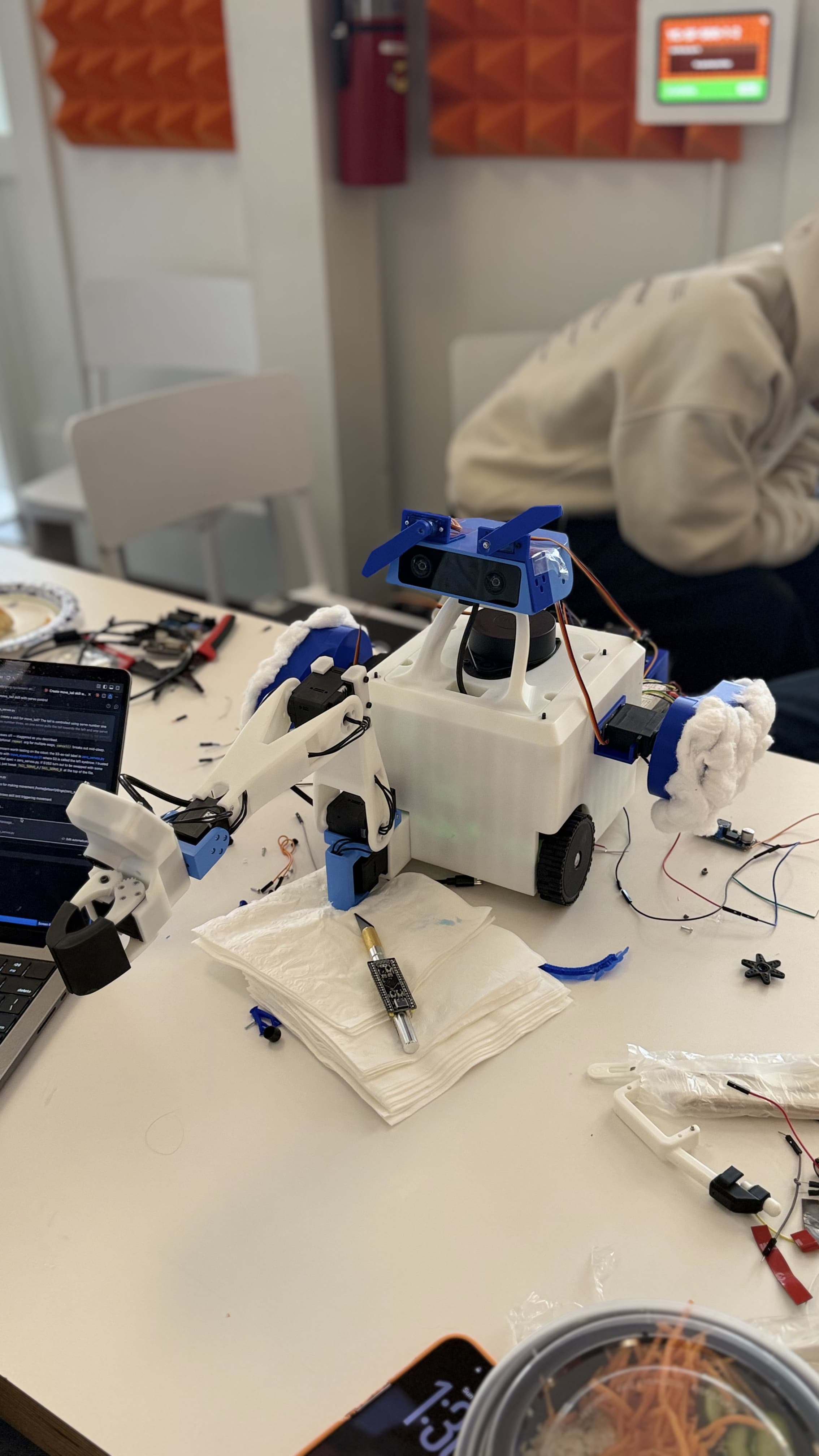
At YC RoboHacks, our team built George, a sensory robot companion that combines Gemini DeepMind VLM reasoning, ElevenLabs voice, and custom expressive hardware to react with human-like personality.
- I spent the weekend at the Y Combinator office competing in RoboHacks, where our team set out to build a robot that does more than execute commands.
- We integrated Gemini DeepMind VLM to handle reasoning and contextual decision-making, giving George a flexible AI brain.
- We used ElevenLabs for lifelike speech output so the robot's responses felt natural and emotionally grounded.
- On the hardware side, we built a custom physical expression layer on the Innate MARS platform, including expressive eyebrows and wings to communicate internal state.
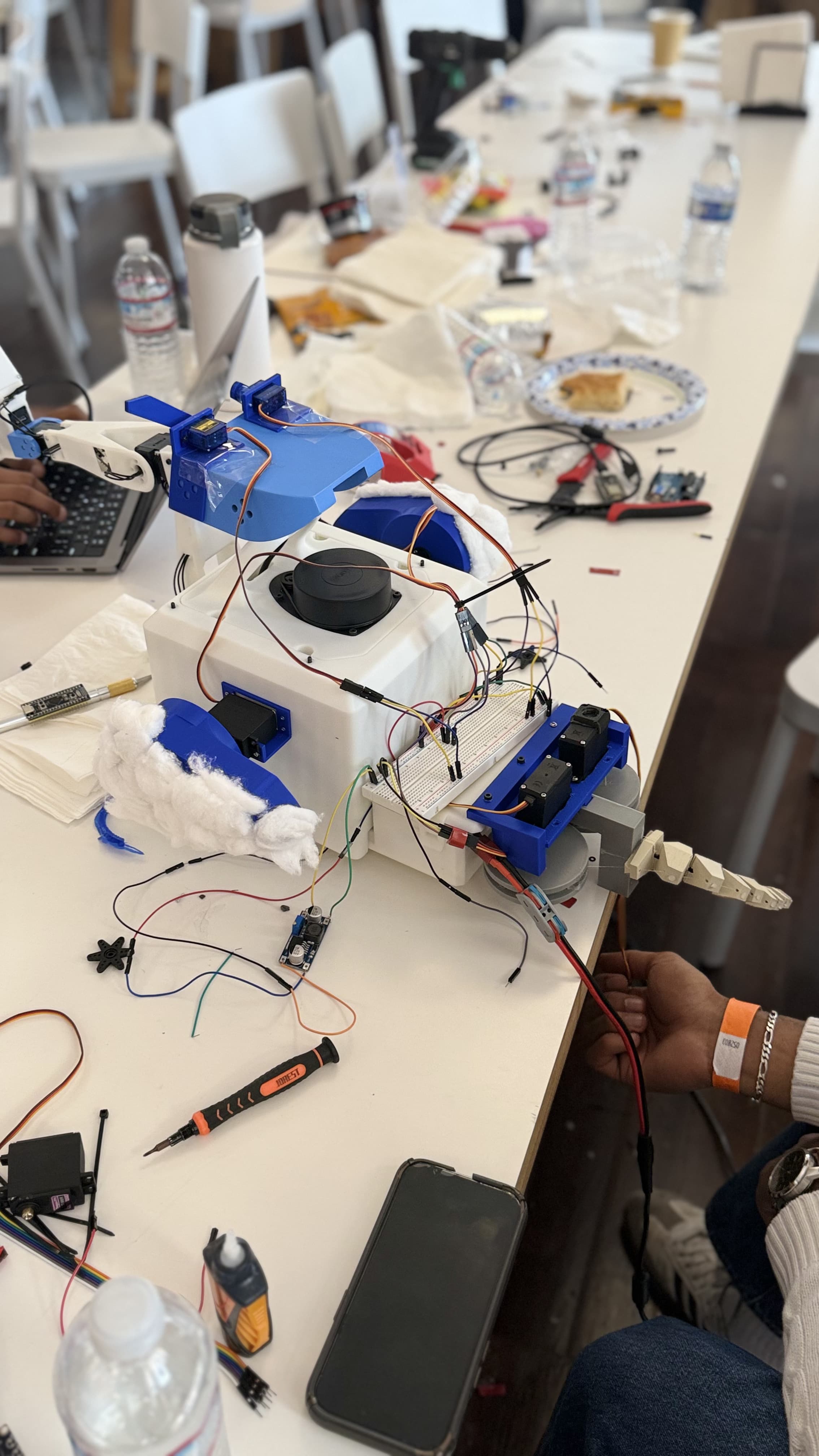
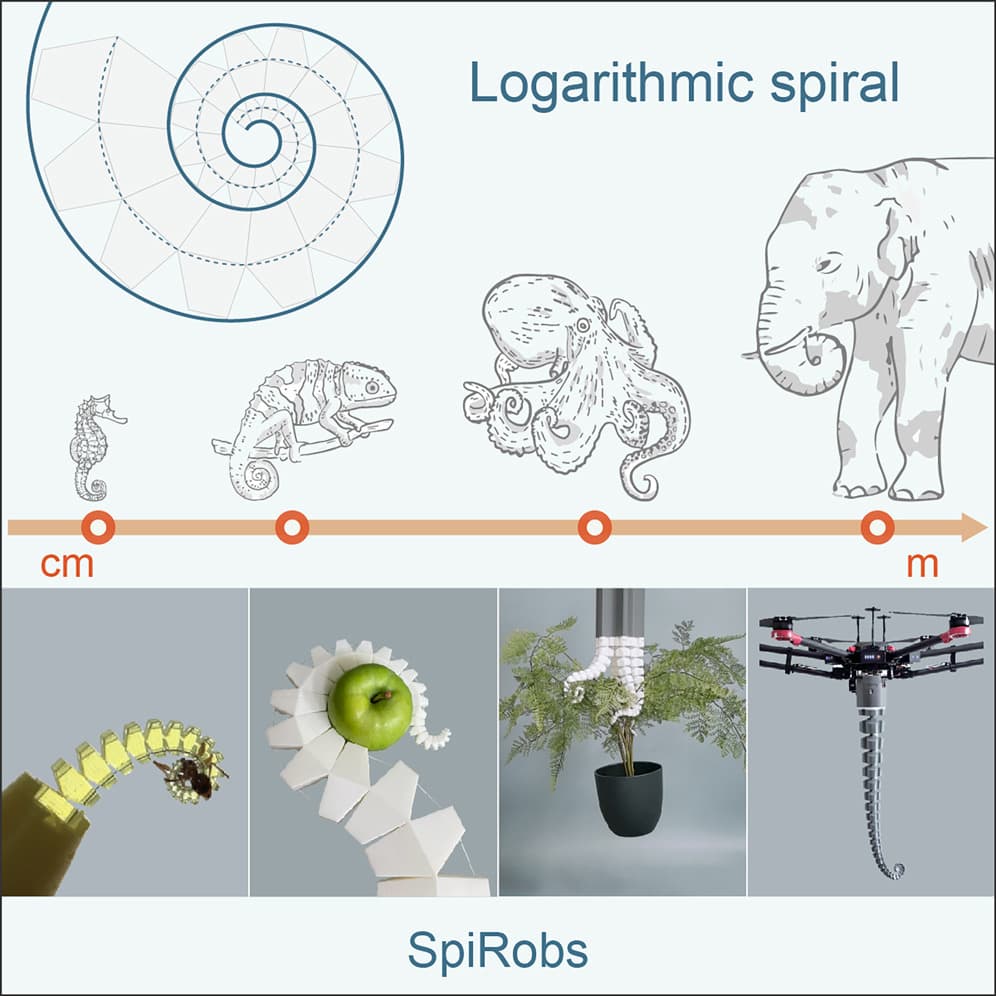
- I helped implement a Spirob-inspired tail mechanism with a modified hardware control setup to deliver bio-inspired motion and nuanced behavior.
- The final system could talk, emote, and physically react in ways that made interactions feel more human than a typical command-and-response robot.
What I learned
- Power distribution was one of the hardest parts of the build: we had to reliably run a six-actuator expression system while keeping noise and voltage drop under control.
- I learned how to architect mixed-voltage rails in a robotics prototype, using a DC step-down (buck) converter to regulate a 12V source down to a stable 5V rail for lower-voltage components.
- We pushed the NVIDIA Jetson Orin GPIO budget hard, so I had to plan pin allocation carefully across actuator control signals and peripheral interfaces.
- I designed and iterated CAD mounts for the eyebrows and tail mechanism so the expression hardware was rigid, serviceable, and aligned during motion.
- Implementing the Spirob-inspired tail system taught me how closely mechanical geometry, actuator limits, and control behavior must be co-designed to produce smooth bio-inspired movement.
Skills Learned
- Human-Robot Interaction Design
- Embodied AI Prototyping
- Multimodal Systems Integration
- Embedded Power Distribution
- DC-DC Buck Converter Integration
- GPIO Resource Planning (Jetson Orin)
- CAD for Robotics Mechanisms
- Gemini DeepMind VLM Integration
- ElevenLabs Voice Pipeline Integration
- Robotics Hardware Control
- Rapid Prototyping in Hackathons
- Cross-Functional Team Collaboration